-
Essential:
Essential cookies are essential for you to browse the website and use its features. Cookies that allow web shops to hold your items in your cart while you are shopping online and navigating the website are an example of strictly necessary cookies. Our website does not work without these cookies, so they are stored without your express consent.
-
Preferences cookies:
Preferences cookies can be used to change the user experience of our website. Preferences cookies allow a website to remember choices you have made in the past.
-
Statistics cookies:
Statistics cookies are used to collect information about how you use our website. None of this information can be used to identify you.
-
Marketing cookies:
Marketing cookies track your online activity. The purpose of marketing cookies is to help advertisers deliver more relevant advertising or to limit how many times you see an ad.


Wooden surfaces in order – How to properly treat the raw surface of your motorhome furniture
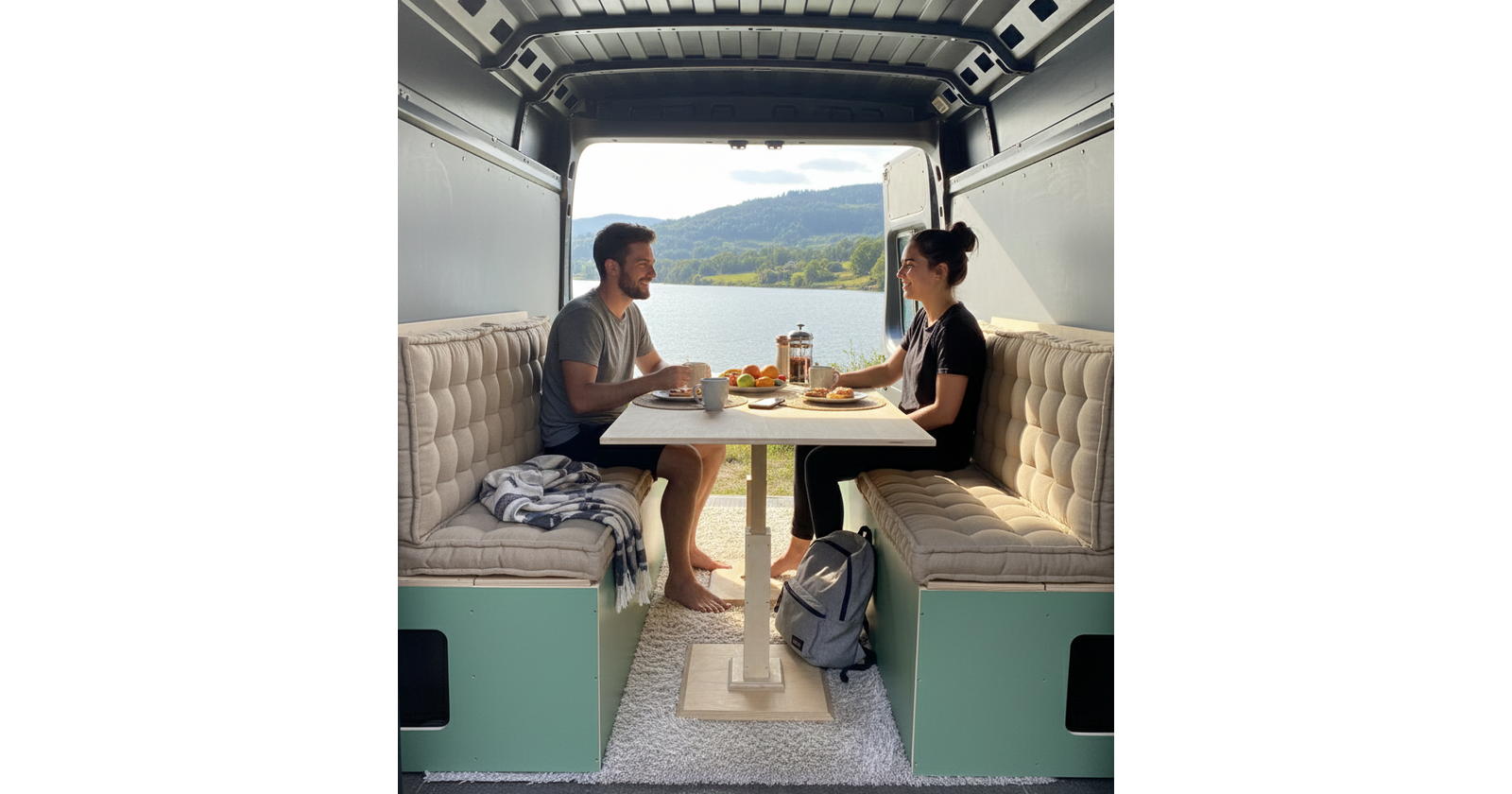
Building a motorhome is a balancing act between durability, weight and style. At life4Van, we don't use the same board for everything. We choose materials according to their intended use: softwood plywood for vertical structures and strong Finnish birch plywood for load-bearing structures.
Many of our modules are delivered pre-coated, but sometimes the DIY spirit calls and you want to leave, for example, birch plywood bed bases or customized details visible. This is where the right surface treatment is key! Although raw wood looks great when freshly installed, it is extremely sensitive to the challenging conditions of a motorhome. Humidity fluctuations, temperature differences and daily use quickly leave their mark. In this article, we will go over why and how to treat wooden surfaces so that they last for years of life and travel.
Why shouldn't you leave raw wood untreated?
A motorhome is a small enclosed space where humidity inevitably rises due to cooking, sleeping and wet equipment. Untreated wood is like a sponge: it absorbs moisture, which can lead to cracking, warping and, in the worst case, mold growth. In addition, it is impossible to keep it clean - even a spilled coffee cup or greasy fingerprint will leave a permanent mark on the unprotected surface.
This is how you treat the raw surface: Step by step
1. Preparation and sanding
Before processing, sand the surface lightly (grit 150–180) in the direction of the wood grain. This opens the pores of the wood, so that, for example, strong birch plywood absorbs the preservative evenly. Remember to remove dust carefully - a clean surface guarantees a professional finish.
2. Choose the right material for your application
Oil waxes: An excellent choice for birch plywood. It leaves the wood feeling natural, but repels water and dirt. Transparent waxes: If you want to play with colors, the beautiful shades familiar from our selection can also be repeated on DIY surfaces with transparent waxes that leave the wood grain visible. Laminate Surfaces: Remember that our softwood cabinets are already finished with a high-quality Formica laminate that requires no treatment - it is designed to withstand heavy use and easy cleaning. 3. Treat both sides To prevent the plywood sheet from warping ("caving"), always treat both sides of the sheet. This is especially important for bed slats and base structures, where we use rigid Finnish birch plywood. Summary A properly treated wooden surface crowns the quality of life4Van modules. It makes your car long-lasting, easy to maintain and stylish. Once the groundwork has been carefully done, you can focus on what is important: enjoying your carefree journey. Do you have any questions about a specific treatment or do you need help choosing materials? Contact us – we will be happy to help you with your project!
